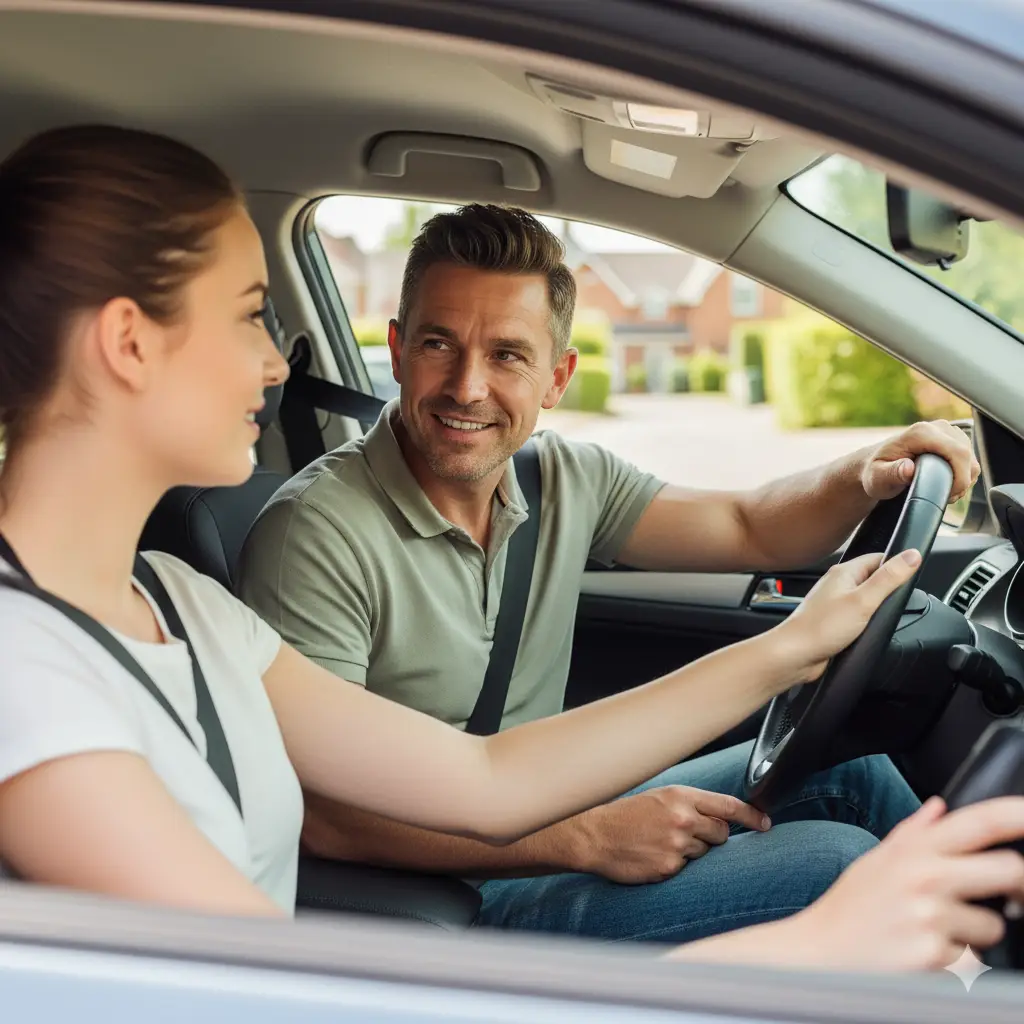
Here’s a blog I wrote several years ago about rapport , still for me one of the most important aspects in driver training, without rapport learning will be weak at best.
.jpg)
A growing body of research and best practice guidance shows that building psychological rapport is a cornerstone of great driver instruction. While many instructors focus on technical proficiency, it is the psychological connection between instructor and learner that frequently determines both the rate and quality of progress behind the wheel.
What Does Psychological Rapport Mean?
In driver training, “psychological rapport “refers to a mutual sense of trust, understanding, and psychological safety in the learning environment. It goes beyond being friendly: a strong rapport allows the learner to share fears and uncertainties freely, and prompts the instructor to adapt teaching methods to the learner’s emotional state, goals, and needs.
Rapport draws on principles of educational psychology—such as autonomy, relatedness, and supportive feedback—to create the emotional climate in which deeper learning and personal development occur. Rapport means that both instructor and learner feel respected and engaged, they are on the same wavelength and that the lesson becomes a collaborative partnership rather than a one-sided transaction often hierarchically based.
The Evidence Base: Why Rapport Matters
I’ve done some research into this and recent studies highlight several key benefits linked to strong rapport:
Reduced anxiety and improved confidence:
Learners who feel psychologically safe are less anxious and more willing to engage, experiment, and learn from mistakes. I know personally that I feel more comfortable to share my thoughts and feelings with someone who I have rapport with.
Better communication and openness:
Learners are more likely to discuss personal challenges, which helps instructors address real barriers, not just surface errors, often the real reason for a mistake in driver training may have nothing to do with what the instructor presumes is the problem often due to skills focused learning.
Long-term behaviour change:
Rapport-based and coaching-led instruction builds habits of reflection and self-efficacy, translating to safer driving beyond the test.
-General educational research indicates that strong rapport and teacher caring reduce student burnout, increase learning enjoyment, and make students more receptive to messages about risk, safety, and self-regulation, all crucial for driver training contexts
Greater instructional satisfaction: Instructors report fewer conflicts and more rewarding relationships with learners when rapport is high.
Evidence from non driver training classroom activities
–In classroom interactions, teachers and students may influence each other either positively or negatively (Luo et al., 2020). A negative teacher-student relationship may lead to stress, anxiety, and aggression in students (Hashemi, 2011; Alnuzaili and Uddin, 2020). Accordingly, creating a positive relationship with pupils is among the top priorities of teachers in any educational setting, especially in the practical instruction classrooms.
A positive and favorable relationship between teachers and students is called teacher-student rapport, also defined as “a harmonious teacher–student relationship which encompasses enjoyment, connection, respect, and mutual trust” . As put forward by Wilson et al. (2010), to establish rapport in classrooms, teachers should pay attention to students’ interests, value their beliefs and ideas, and allow them to freely express their feelings toward instruction.
Techniques for Building Rapport: Research-Informed Approaches
Genuine Interest:
Begin each session with open, non-judgmental conversation about the learner’s recent experiences and current concerns.
Active Listening:
Encourage and validate questions and emotions, showing empathy and attentiveness.
Positive, Constructive Feedback:
Focus feedback on effort and strategies, avoiding negative judgments about the learner. Negative feedback that is destructive is the quickest way to ruin rapport, it often comes from frustration.
Understanding that people make mistakes and all sit on different learning plateaus at different times.
Collaborative Goal-Setting:
Involve the learner in choosing lesson goals and reviewing progress, fostering ownership over the process].
Normalize Mistakes:
Frame errors as natural and valuable opportunities for learning and growth, not as failings. Every mistake carries a positive.
These approaches foster a psychologically safe space, allowing deeper learning and greater honesty. Ask yourself how you would feel if someone spoke to you in a critical way.
How Do You Know When Rapport Is Achieved?
In practical terms, true rapport is reflected in several observable ways:
The learner actively participates in lessons—asking questions, reflecting on mistakes, and sharing challenges without shame.
Instructor–learner conversations become increasingly two-way, moving from instruction-heavy to collaborative exploration.
The learner accepts constructive criticism and is willing to try new tasks or techniques.
Tension and defensiveness give way to mutual respect—and, often, humour—making lessons feel productive and enjoyable.
Progressively, the learner becomes self-motivated, and the instructor’s role transitions from directive to coaching and facilitating.
Rapport as the Hidden Engine of Driver Development
Building psychological rapport is not just a soft skill—it is a powerful, research-backed driver of accelerated learning, safety, and lasting behavioural change. Instructors who invest in rapport-building techniques set the stage for more effective lessons, higher pass rates, and, ultimately, safer roads. Recognising when rapport is present allows instructors to tailor their teaching, resulting in measurable progress both in lessons and long-term driving behaviour.
Woody

Downloaded the sv66apps a few days back and I like it! Much easier to play on my phone. Pretty smooth too. Give it a try at sv66apps. May your odds be forever in your favour.
VIPjlactivity, you say? Sounds fancy! Seems like they’ve got some ongoing promotions and activities. Worth checking out if you’re aiming to get some extra perks. See what they’re offering at vipjlactivity.
Okay, tried logging in on vvjllogin, it was really straightforward! No weird errors or anything. Super user-friendly. Might be good, give it a try!Check out vvjllogin.
Decided to try 161bet7 after seeing an ad. Overall, not bad with a clean design. Lots of slots, so I spent a lil time there, but I’m more of a live dealer guy. I hope they add some more live casino tables soon!
Gà chọi C1 Thomo, the ultimate! It’s not just a sport, it’s a lifestyle. Got any good stories from Thomo? Let’s hear them! gà chọi c1 thomo
Yo, finally got around to trying to download 88vin and it seems pretty straightforward! Hope it lives up to the hype, fingers crossed for some good luck! Check it out here: download 88vin
For comprehensive Macau scores and info, I rely on 7m.cn ma cao. Everything you need to stay in the loop! Give it a try, you won’t regret it! 7m.cn ma cao
Been messing around on gamev3 and it’s pretty neat! They’ve got a good selection of games and the site loads quickly. No complaints here – good for a quick gaming fix. gamev3
Alright, 213bet, you’re up next. Looking for a new place to throw some bets down. Hope the odds are good and the payouts are even better! Let’s get this bread! 213bet
Alright, logged into Jljl72 just now. Smooth login process, thankfully. Let’s see if my luck changes today! You can log in too jljl72login.
The 7j777app is pretty cool. I gotta give em props, the app runs so smoothly without any issues. Try downloading it and see for yourself! Get it here: 7j777app
Hey guys, saw a few people talking about jili30login. I signed up myself last week and so far, so good! The interface is clean and easy to navigate. Worth checking out jili30login.