The Power of Reflection in Driver Training

Reflection is one of the most powerful yet underused tools in driver training. Whether working with a novice learner, a trainee instructor, or an experienced driver aiming to improve, the ability to look back on experiences, analyse them, and extract meaningful learning is what transforms driving from a set of mechanical skills into a lifelong competence rooted in awareness, responsibility, and growth. In driver training, reflection bridges the gap between experience and learning. Without it, mistakes become repeated habits; with it, they become opportunities for growth.
Why Reflection Matters in Driver Training
Driving is not just about knowing how to control the car. It is about decisionmaking, risk awareness, and selfregulation. Reflection gives learners the space to pause and make sense of what happened during a drive, allowing them to:
Understand why certain decisions worked or did not.
Recognise personal strengths and areas for development.
Develop responsibility and ownership of their driving.
Transfer learning from one situation to another.
Build resilience by learning from mistakes rather than fearing them.
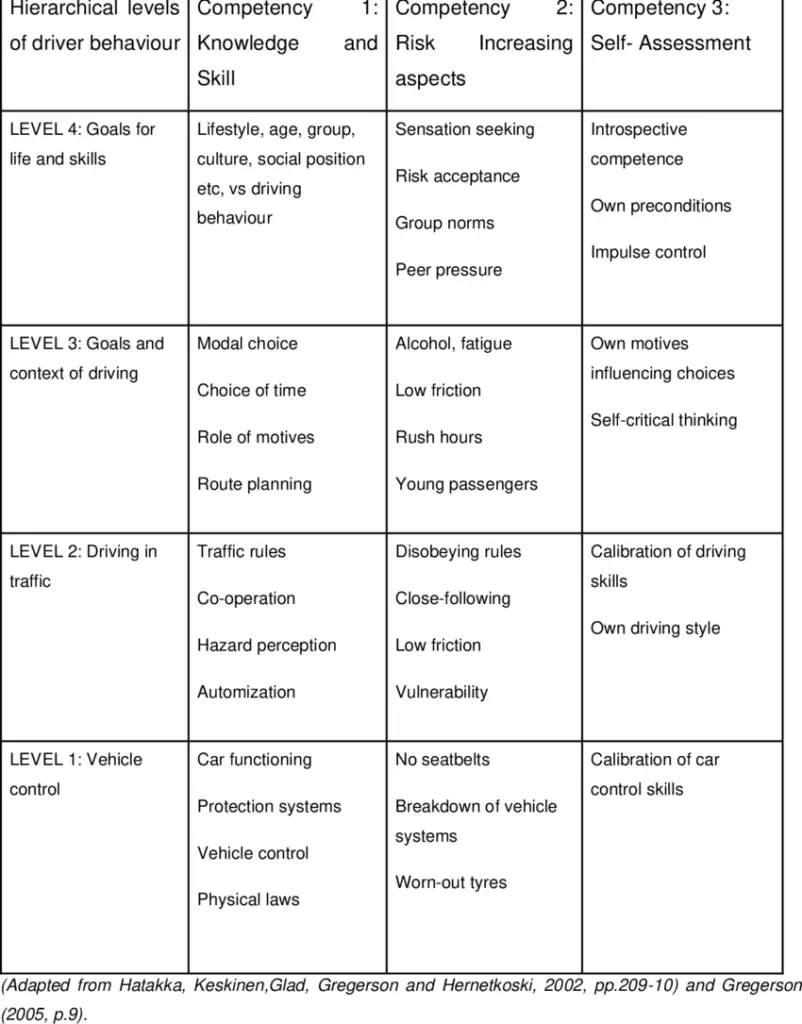
Reflection aligns closely with the Goals for Driver Education (GDE) Matrix, which encourages drivers at all levels to think beyond car control and into personal goals, social responsibility, and longterm risk management.
Reflection at Different Stages of Driver Training
Novice Learners
For new drivers, reflection can help build confidence and awareness. Rather than focusing only on fault correction, instructors can encourage learners to describe what went well, what felt challenging, and what they would do differently next time.
Scenario Example:
A learner stalls when moving away from traffic lights.
Instead of the instructor jumping in with a correction, they ask:
“What do you think happened there?”
“How did you prepare for moving off?”
“What could you try differently next time?”
By reflecting, the learner realises they released the clutch too quickly without enough gas. This creates self-generated learning—far more memorable than being told the answer.
PDIs and ADI Development
For potential driving instructors (PDIs) and existing ADIs, reflection is at the core of professional growth. In fact, the Standards Check and Part 3 assessments are built around reflective practice—candidates are expected to think about how their teaching methods impact learning rather than just deliver instructions.
Scenario Example:
A PDI finishes a roleplay exercise where the ‘learner’ consistently misses mirrors. In feedback, instead of asking “Did I cover MSPSL correctly?”, the PDI reflects:
“Did my questioning approach actually bring out the learner’s awareness?”
“Was the issue the learner’s lack of knowledge, or did I not provide enough opportunities to practise?”
This reflection shifts focus from ‘ticking instructor boxes’ to understanding learning outcomes.
Experienced instructors who embrace reflection often refine their questioning, manage risk more effectively, and become more adaptive to different learner needs.
Advanced and Experienced Drivers
Reflection is equally powerful for qualified drivers who may have developed ingrained habits. Posttest training, fleet driver assessments, or advanced driver development rely heavily on reflection to break these habits.
Scenario Example:
An experienced fleet driver is observed tailgating in motorway traffic. When asked immediately, they justify it as “keeping up with the flow.” After a reflective debrief, they are invited to consider:
“What might the driver ahead feel if they saw you so close?”
“How would this distance affect your ability to react if they braked sharply?”
Through guided reflection, the driver often recognises their risk taking tendencies and chooses to adapt their behaviour, rather than simply obeying an instructor’s command.
Techniques to Foster Reflection
Questioning models: Use open questions like “What did you notice?” or “How did that feel?” to draw out insight.
The coaching cycle: After any scenario—be it a manoeuvre, a near miss, or a successful stretch—pause for a structured 2 minute reflection before moving on.
Written or digital logs: Learners can keep reflection journals after lessons, noting three positives and one improvement.
Scaling techniques: Ask drivers to rate confidence in a skill on a scale of 1–10, then reflect on what would move them one point higher.
Video playback: Dashcam footage can be powerful for encouraging drivers to reflect on choices, positioning, awareness, and timing.
Real Life Benefits of Reflection
A nervous learner who once feared roundabouts realises, through reflective questioning, that their main struggle is early observation, not steering. They then focus on scanning earlier and gain confidence.
A newly qualified driver who had a near miss reflects afterwards and understands the importance of anticipation—an insight that is far more valuable than simply hearing “watch out.”
An ADI who consistently struggles with time management on lessons uses reflective practice after a standards check to restructure how they set goals, transforming both their efficiency and stress levels.
Linking Reflection to Life Beyond Driving
What makes reflection vital is that it builds life skills, not just driving skills. A reflective learner becomes:
More resilient under pressure.
Better at problem solving.
More responsible in making risk aware decisions.
Ultimately, reflection fosters self coaching. Instead of depending on an instructor or trainer to correct every mistake, drivers learn to identify, analyse, and adapt independently—a habit that is crucial once they are driving solo.
The most effective driver training, at any level, is not about passing tests or logging miles behind the wheel. It is about developing drivers who can think critically and adapt responsibly. Reflection makes this possible by embedding learning at a deeper level.
Whether it is a nervous 17 year old stalling at lights, a trainee instructor learning to coach, or a company driver unpicking longstanding habits, reflection turns experiences into lessons—and lessons into lasting changes on the road.